The Oracle That Wears Us
An oracle woven from moving thread. It listens to how you speak, shows you how it sees you, and has a machine draw your mark onto a cloth shared by every visitor.
An interactive installation at PROTO 26, IADE's fashion show in Lisbon, on 25 September 2026. We built an agentic AI pipeline that listens to each visitor, assigns them a symbol, and has a robotic plotter draw it, so that over one evening the visitors design a collective cloth together.
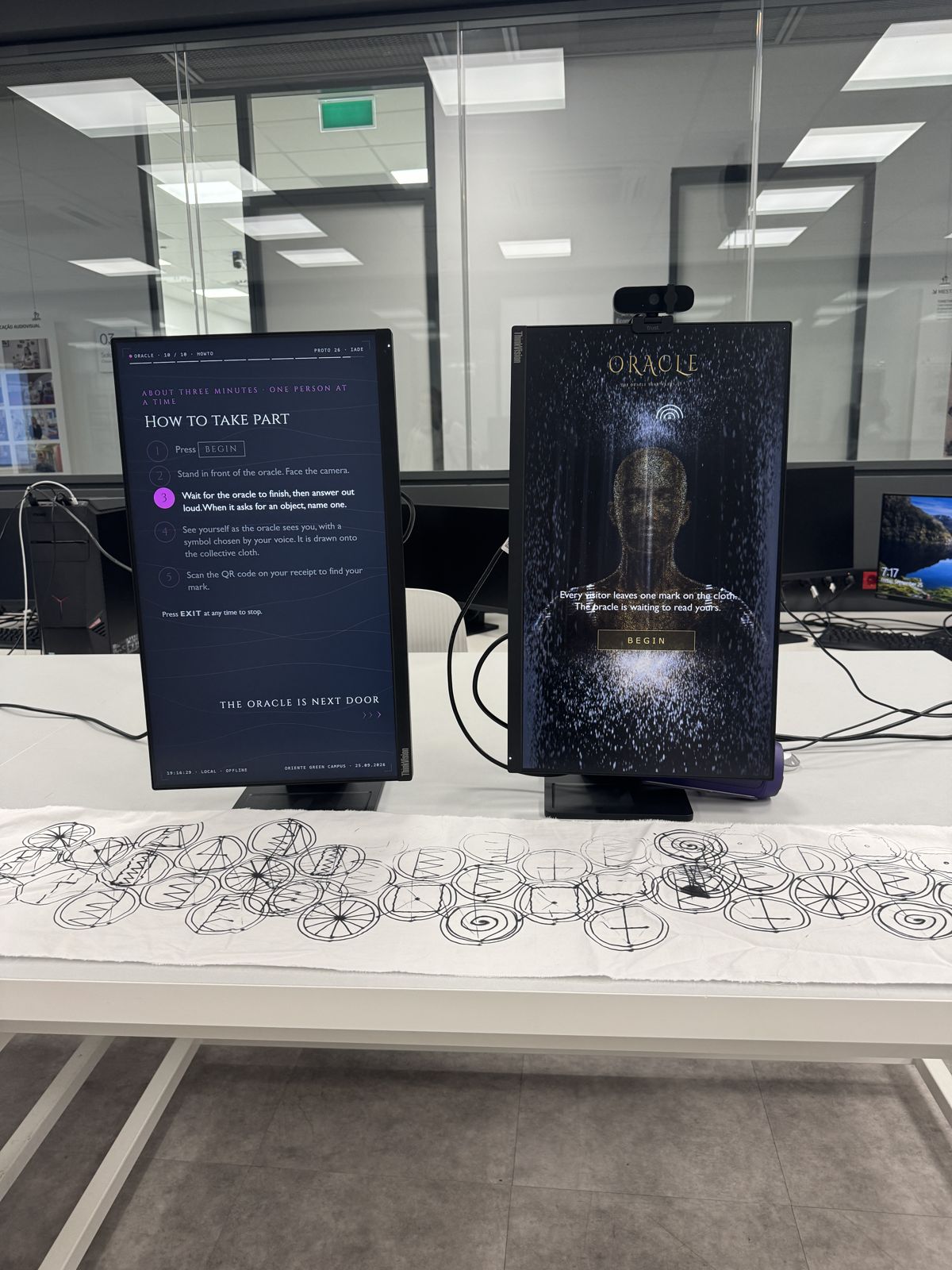
Two screens stood side by side: an animated flyer that explained the work to anyone passing, and the oracle itself. Beside them the plotter drew each new mark onto a long strip of fabric, next to a screen showing the cloth growing online.
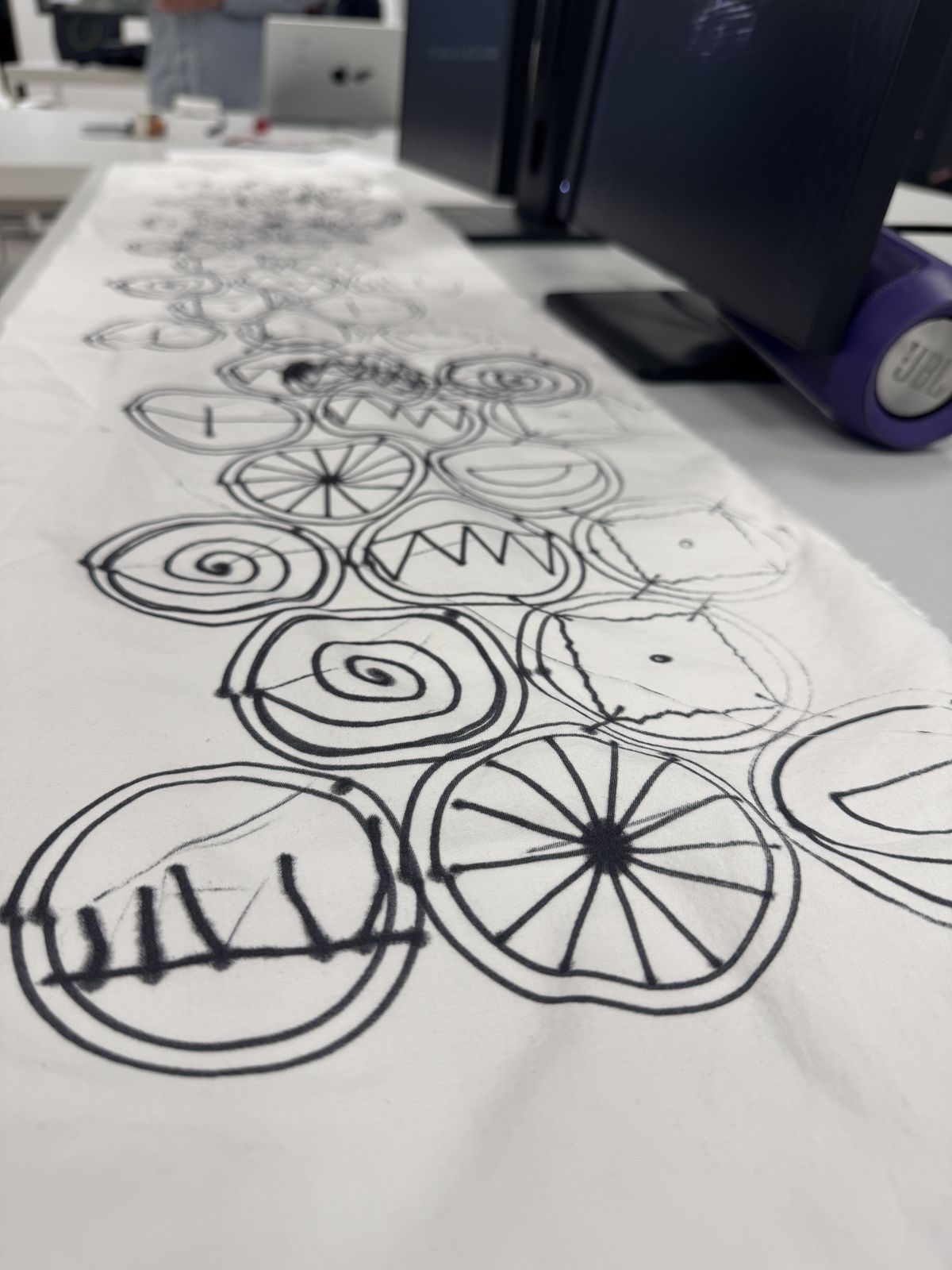
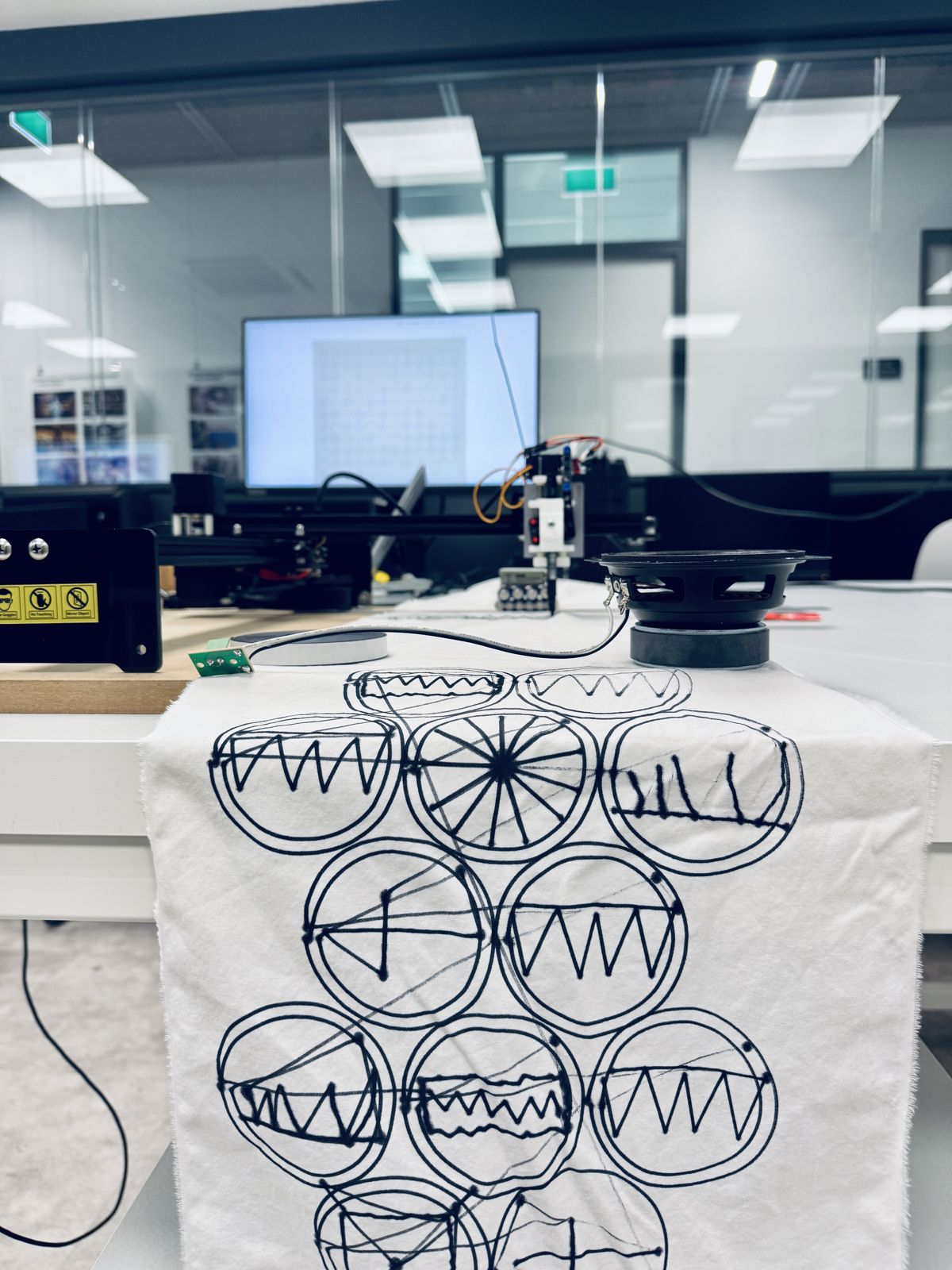
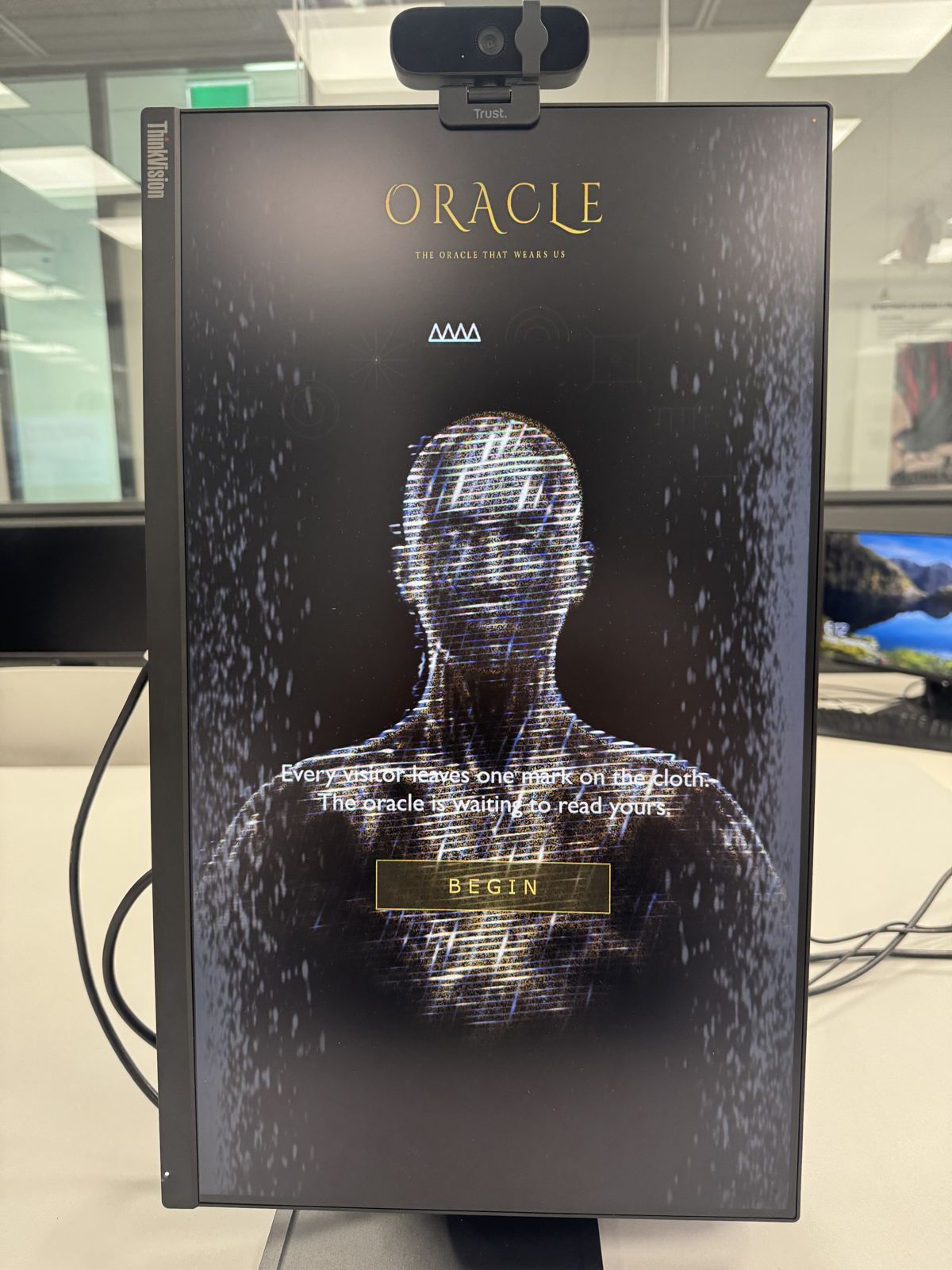
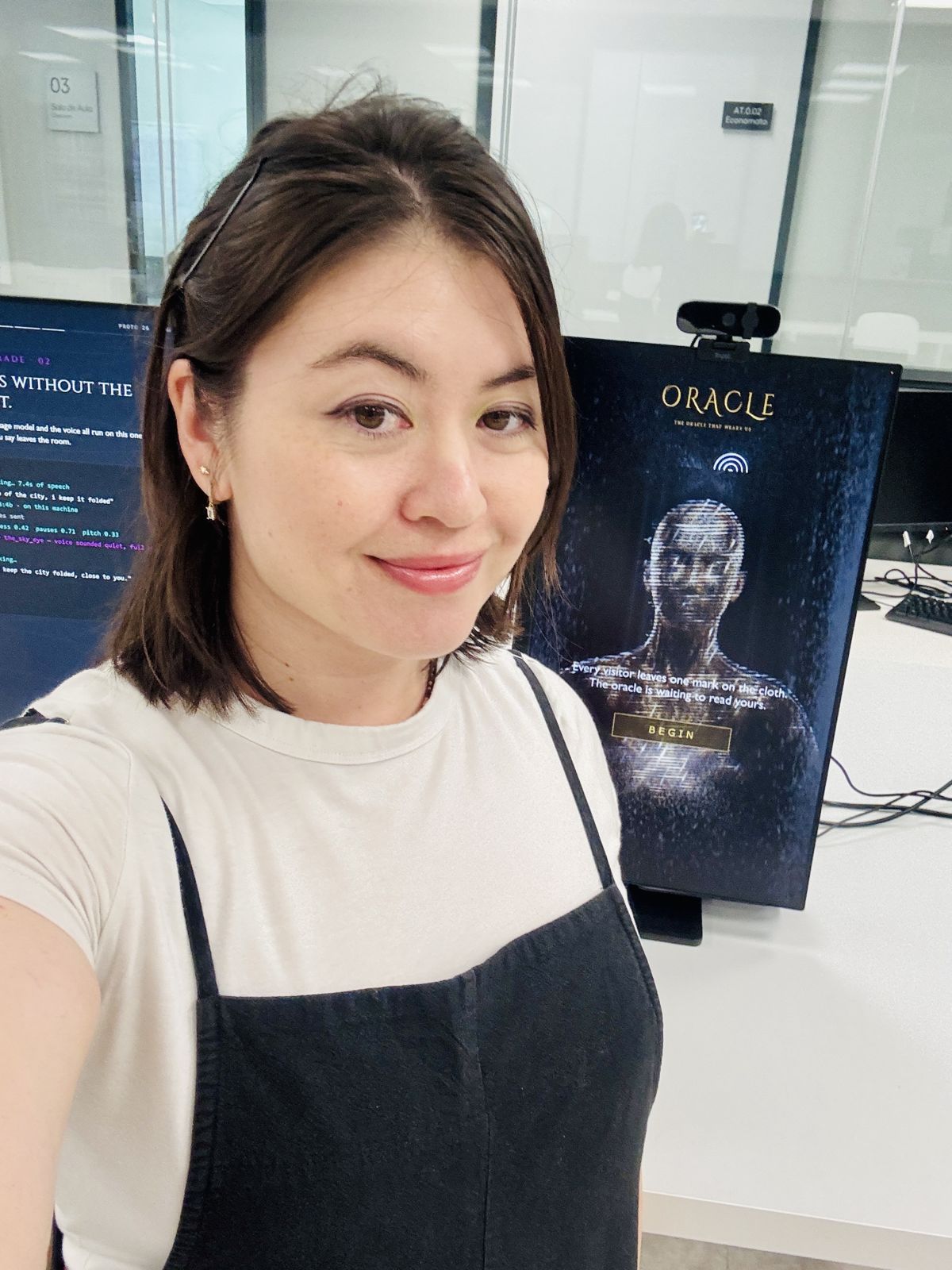
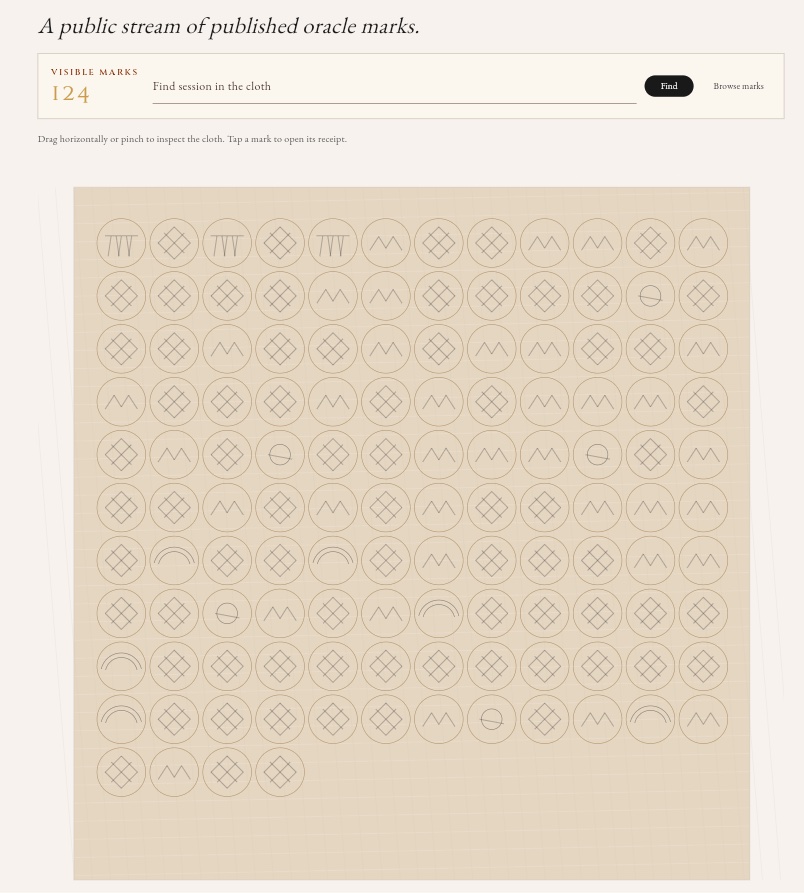
Every mark is archived online: the collective cloth
Four questions. A machine that reveals how it interprets you.
A century ago, travelling workers are said to have left chalk codes for the strangers who came after them. Oracle carries that habit into a time of AI: a figure woven from moving thread speaks with one visitor at a time and leaves their mark on a cloth shared by everyone.
- Four spoken exchanges with a language model that runs on the installation itself. Nothing you say leaves the room.
- Your voice, not your words, chooses one of eight marks.
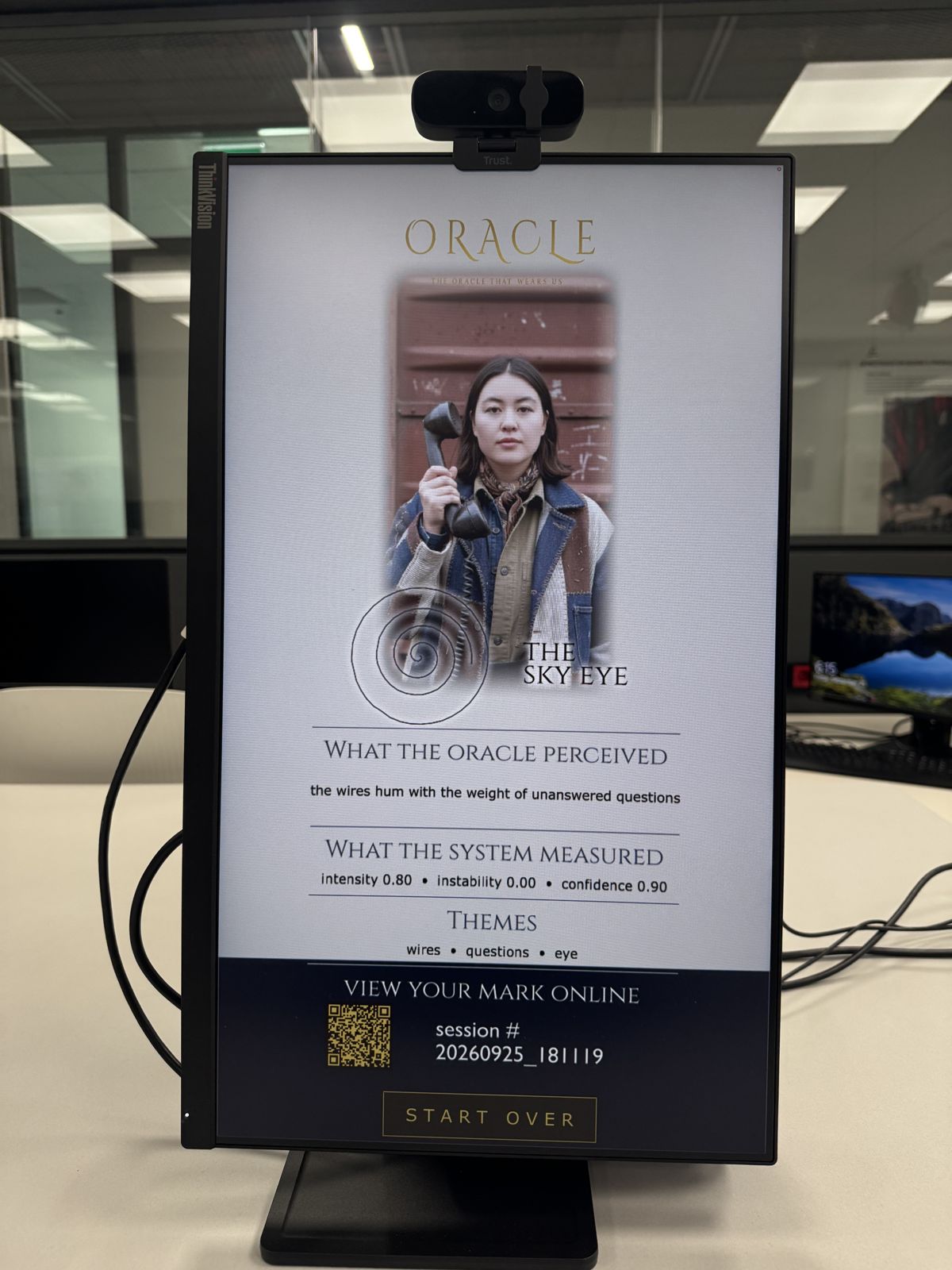
- An AI portrait dresses you as a traveller of the road, holding the object you named, and weaves your face into the oracle's.
- A rescued plotter draws your mark onto the collective cloth, which is archived online.
one session at the exhibition, cut from three and a half minutes.
The oracle's threads give way to the visitor's over the four turns. The face first shows through on the third answer; by the end the oracle is wearing it.
Five machines, one conversation.
It hears how you speak.
Every answer is recorded and measured: how loud you are, how much the loudness surges, how long you pause, how high your voice sits and how much it moves. Each number is ranked against every visitor who came before you. After the fourth answer, the nearest of eight voice profiles becomes your mark.
A quiet voice full of pauses tends toward The Sky Eye. A loud, surging one toward The Thorns. Say the same words in a different way and you leave a different mark.
python · signal measures ranked against past visitorsIt thinks without the internet.
Speech becomes text, a language model writes the oracle's reply, and a synthetic voice speaks it, all on the installation's own computer. The conversation never leaves the room. The oracle is also told how you sounded, so its last words touch on your voice as well as your answers.
vosk · gemma 3 4b via ollama · kittenttsIt is woven, not played.
The oracle is not a video. Its figure is rebuilt from threads every frame in a GLSL shader, and the threads loosen when it speaks. Over the four turns the visitor's portrait is woven in, thread by thread, in the oracle's place.
touchdesigner · glslIt dresses you for the road.
This is the one step that goes online. Your photo, cropped to your face, and the object you named go to an image model, which returns you as a traveller of the road: a patchwork coat, a boxcar wall with chalk marks, and your object held larger than life. The object is how people recognise themselves.
google nano-banana via replicate · opencv face cropA rescued machine draws your mark.
A small neural network, trained on 1,440 recordings of actors performing emotion, turns the voice readings into the character of the line: its weight, curve, noise and density. Two people with the same symbol never leave the same drawing.
The plotter began as a broken laser engraver someone threw away. Andrey Dyakov took it apart, rebuilt it with open-source firmware and gave it a pen. It draws each mark line by line onto the collective cloth. It does not print.
mlp (ravdess) → onnx · rebuilt neje engraverA code left for whoever comes next.
Eight signs adapted from the travellers' chalk code. Your voice decides which one you receive; our custom-trained model decides how its line is drawn.
What user testing changed.
Oracle went through several rounds of user testing in the spring, then a rebuild for the exhibition. The biggest changes answered one question: could a visitor tell what the oracle was doing, and find themselves in the result?
The oracle leads the conversation.
we sawFaced with an open-ended chat, visitors did not know what to say to an oracle.
we changedThe oracle now guides a fixed arc. It asks for an object, then asks a question that turns that object back to the visitor so they can reflect, and it closes on what they would leave for the people who come after them, bringing the conversation back to the collective cloth.
The system admits it is listening.
we sawVisitors could not tell whether the microphone was on. The listening ring pulsed at a fixed rate whether they spoke or not.
we changedThe ring is now driven by the live loudness of the voice. It swells when you speak and falls still when you stop.
A face you can still find yourself in.
we sawPasting the visitor's face onto the oracle read as a glitch, not a transformation. It felt fragile and distant.
we changedAn image model now redraws the visitor while keeping their likeness. When the portrait appeared, testers who had been unsure went still and leaned in.
The object comes back to you.
we sawA visitor would name a compass and receive a portrait with no compass in it. The conversation and the image did not connect.
we changedThe named object now travels from speech into the portrait and the receipt. It became how visitors recognise themselves.